
About the Montgomery County Clerk and Master's Office
The Clerk and Master is the records office for Chancery Court in Montgomery County. Heather L. Moore, JD, serves as Clerk and Master, working with the Chancellor, attorneys, and county citizens. The office handles equity matters, including divorce, estates, name changes, guardianships, and conservatorships. It is the office to contact for Chancery records, dockets, and forms.
Clerk and Master, Chancery Court
2 Millennium Plaza, Suite 101
Clarksville, TN 37040
931-648-5703
Mon-Fri, 8:00 a.m.-4:30 p.m.
What the Clerk and Master Does in Montgomery County
Chancery Court is an equity court, and the Clerk and Master keeps its records. The office stresses its role in difficult family, estate, and property disputes, and in helping people find where to go for help. Email reaches the office at ClerkandMasterInfo@montgomerytn.gov, and the fax line is 931-648-5759.
- Divorce and family matters filed in Chancery.
- Estates, small estates, and probate-related filings.
- Name changes and other equity petitions.
- Guardianship and conservatorship cases.
- Chancery dockets, forms, and records requests.
This split is why divorce and probate run through the Clerk and Master, not the Circuit Court Clerk. New filers often assume one clerk handles everything, then learn that a divorce or an estate belongs here on the Chancery side. Getting to the right office first saves a trip across the building. Both offices sit in the same Courts Complex at 2 Millennium Plaza, the Circuit Court Clerk in Suite 115 and the Clerk and Master in Suite 101.
The office serves three audiences at once: the Chancellor who decides the cases, the attorneys who file them, and the citizens who need help. Many of those citizens are dealing with hard moments, a death in the family or a contested divorce, so the office frames part of its role as helping people find where to go.
The screenshot below is the Clerk and Master page.
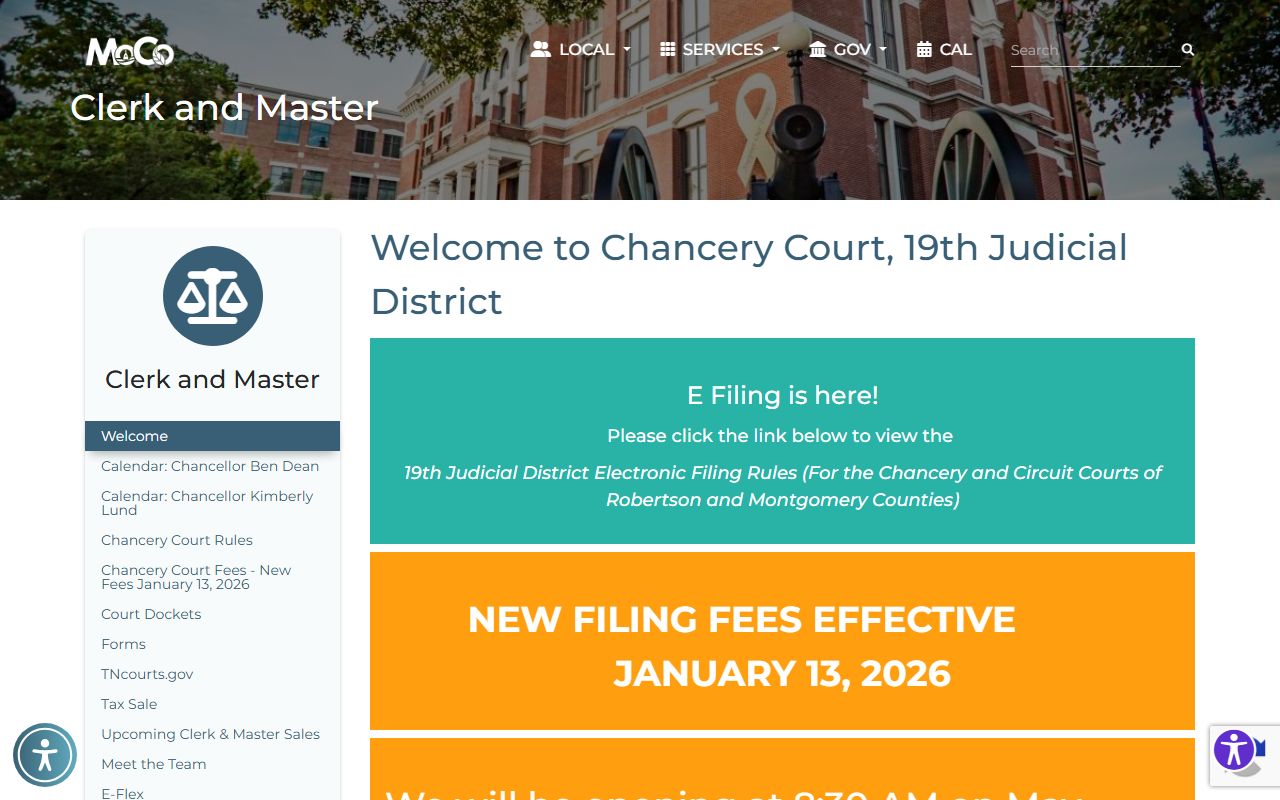
It shows the office contact box, e-filing notice, and the Clerk and Master's duties. The Clerk and Master is a court officer who supports the Chancellor and manages the Chancery case flow, from filing through final order. That makes the office the practical front door for anyone with a Chancery matter in Montgomery County.
How to Request a Certified Copy
For a Chancery record, such as a divorce decree or an estate order, the Clerk and Master provides certified copies. A certified copy carries the court's seal and is what agencies accept for legal use.
- Identify the case by name or case detail.
- Contact the Clerk and Master at Suite 101 during public hours.
- Request a certified copy of the order or decree.
- Pay the fee set by the current Chancery schedule.
- Use the public records request form for broader requests.
The Chancery forms page links the records request and estate forms.
A divorce decree is the document people request most. It proves a marriage legally ended and is often needed to remarry, change a name, or settle benefits. The Clerk and Master can certify the decree from the case file. For an estate, the order appointing an executor and the final order closing the estate are the records heirs and banks usually ask for. Bring the case or estate name and any dates you have, since that helps staff pull the file quickly.
Records Request Form Fields
A Chancery records request needs enough detail to locate the file. The fields below are typical.
| Field | Type | Notes |
|---|---|---|
| Requester name | Text | Who is asking. |
| Case or estate name | Text | Helps the office find the file. |
| Record requested | Text | Describe the decree, order, or filing. |
| Copy type | Choice | Plain or certified copy. |
An interpreter request form is also available for language access in Chancery matters. The more precisely you name the record, the faster the office can find it, so include dates, party names, and the type of order when you can.
Clerk and Master Fees
Chancery fees are set by the court schedule, and a new schedule took effect January 13, 2026. Confirm the current amount with the office before filing or ordering a copy.
| Item | Amount |
|---|---|
| Chancery filing fee | Per current Chancery fee schedule |
| Certified copy | Per current Chancery fee schedule |
| Indigency affidavit | May waive costs if eligible |
The office can confirm current amounts and accepted payment methods. Because the fee schedule changed in early 2026, an older figure you find elsewhere may be out of date. Ask the Clerk and Master for the current cost when you file, and ask whether an indigency affidavit applies to your situation. The office fax line is 931-648-5759 for documents that must be sent that way.
Common Clerk and Master Forms
The Chancery forms list covers the filings most people need. These are common starting points.
- Tennessee court-approved divorce packets, with and without children.
- Parenting plan forms and the Non-IV-D demographic form.
- Estate claim, small estate, and annual accounting forms.
- Statistical information sheet and Uniform Affidavit of Indigency.
- WebEx notice and public records request forms.
The probate records page explains the estate forms in more depth. Picking the right form at the start matters. A small estate uses a different packet than a full administration, and a divorce with children needs a parenting plan that a childless divorce does not. When in doubt, the office can point you to the correct form before you file.
Mail and Online Filings
The Chancery Court uses the state e-filing system for the 19th Judicial District, so attorneys file electronically. Chancery dockets are posted by judge and date, with trial dockets a week ahead and motion dockets on Tuesdays, and neither is updated after posting. The office strategic plan reflects ongoing work to modernize service.
The screenshot below is the Clerk and Master strategic plan page.
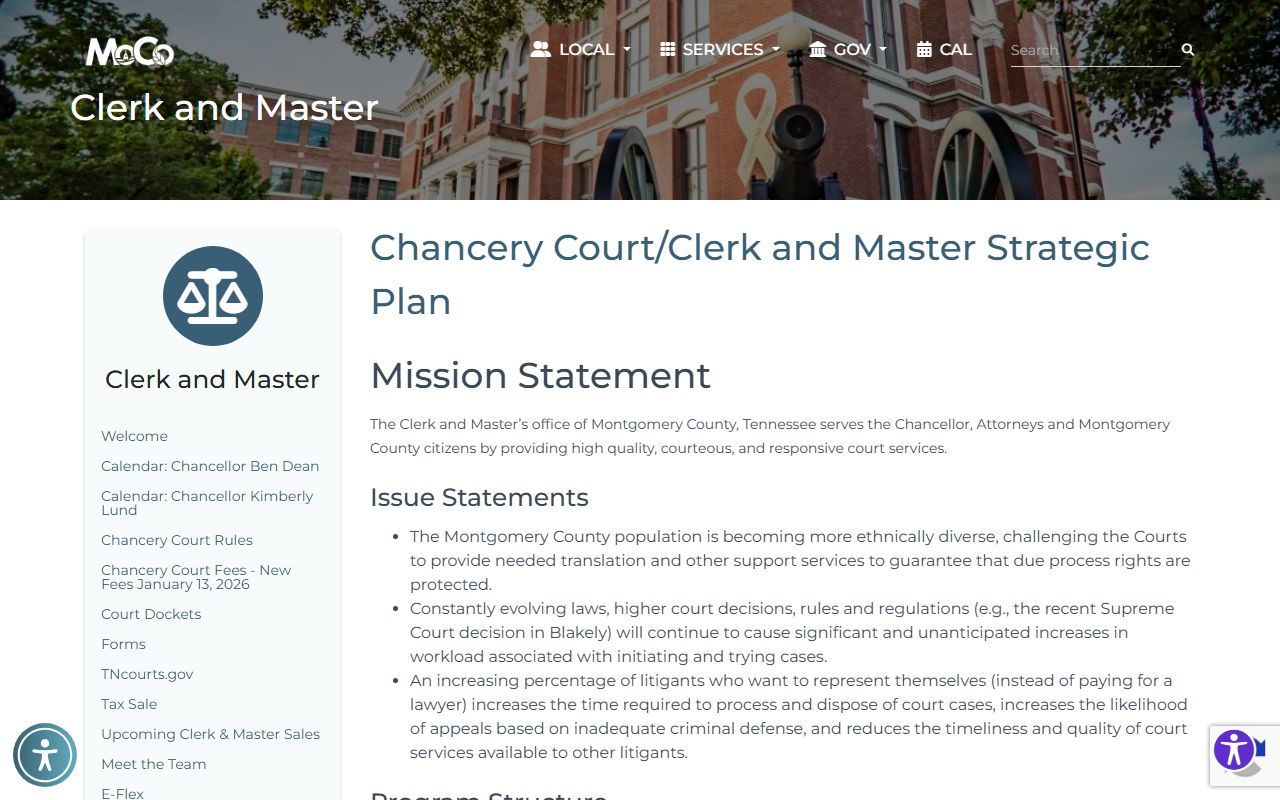
It outlines the office's goals for serving the Chancellor, attorneys, and county citizens.
Because dockets are not refreshed after posting, treat a Chancery date as a plan and confirm it with the office. A WebEx notice form supports remote appearances in some matters, which can save a trip downtown when the court allows it. The office can tell you whether your hearing is set in person or by video.