
Tennessee Public Records Act
Tennessee opens government records to the public through the Tennessee Public Records Act. The base rule, at Tennessee Code § 10-7-503, says public records of government bodies are open to Tennessee citizens unless an exception applies. The Tennessee Comptroller's Office of Open Records Counsel publishes guidance on the Act and on how to make a request. Montgomery County follows the Act with its own public records policy and request form.
Court records sit under a related but separate framework. Tennessee Supreme Court Rule 34 governs public access to court files, while the Public Records Act covers other county records. Knowing which framework applies tells you where to send a request. A deed, a license, or a meeting minute goes through the Act and the county. A case file goes through the court and Rule 34.
The screenshot below is the Comptroller's public records FAQ.
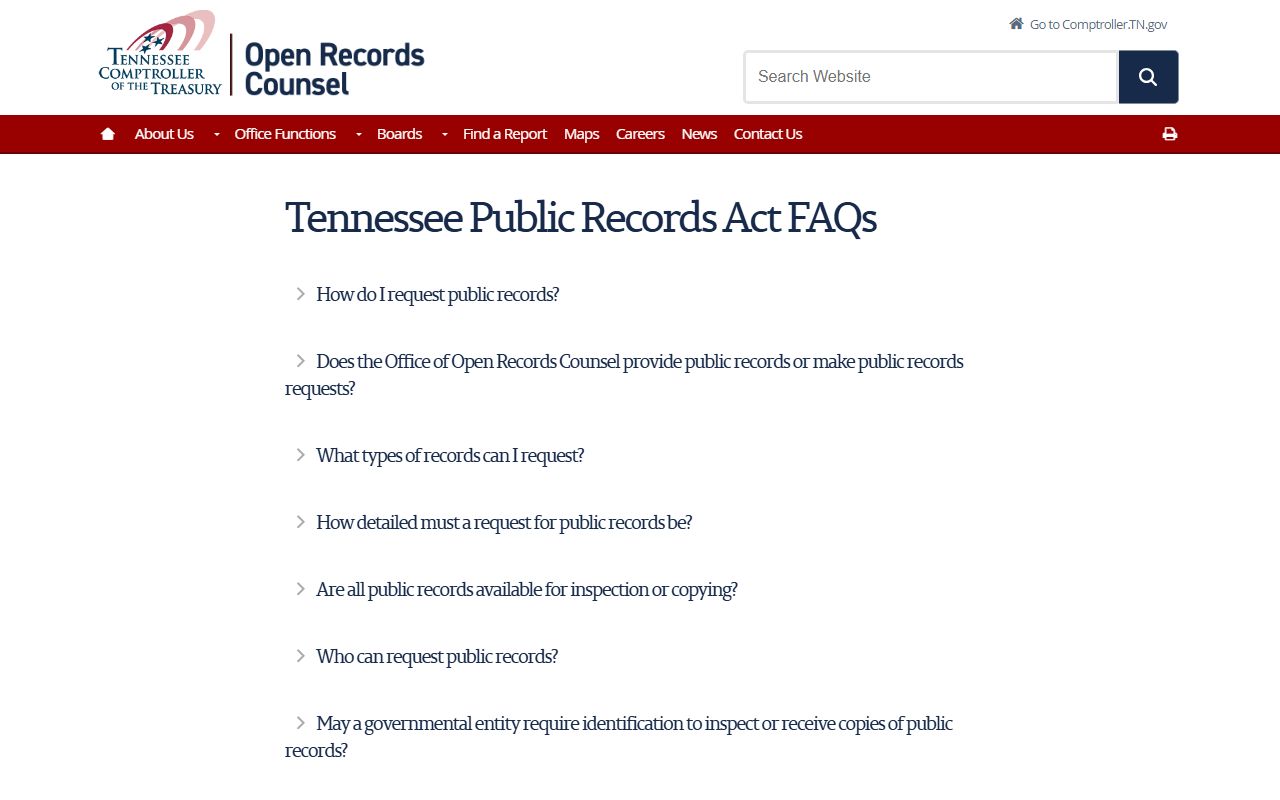
It answers common questions about what the Act covers and how requests work in Tennessee.
What Records the County Clerk Maintains
Public records reach well beyond the courts. The County Clerk and other county offices hold many records that are not court files. These are the kinds of records people request outside a court case.
- County Commission minutes and official meeting records.
- Business and beer licenses issued by the County Clerk.
- Marriage licenses and notary records.
- Vehicle title and registration records.
- County policy, budget, and administrative records.
- Passport application records processed by the County Clerk.
Property and deed records are held by other county offices, such as the Register of Deeds and the Assessor of Property. If you are not sure which office keeps a record, the county records coordinator can point you to the right place, which saves a request that would only be bounced.
Court case files are different. For those, use the court records portal or contact the Circuit Court Clerk. Sheriff's Office records, such as the booking log and incident-related data, follow their own access rules through the Sheriff's Office. The point is that "public records" is a wide term, and the office that holds a record decides how you request it.
How to File a Public Records Request in Montgomery County
The county routes public records requests through its Communications office. The county publishes both a policy and a request form, and requests go to the records coordinator. The steps below follow the county's process.
- Open the Montgomery County public records page.
- Read the county's open records policy.
- Complete the official records request form.
- Submit it to the county records coordinator in Communications.
- Respond to any fee estimate before the work begins.
The public records page links the request form and the policy.
The screenshot below is the county's public records page.
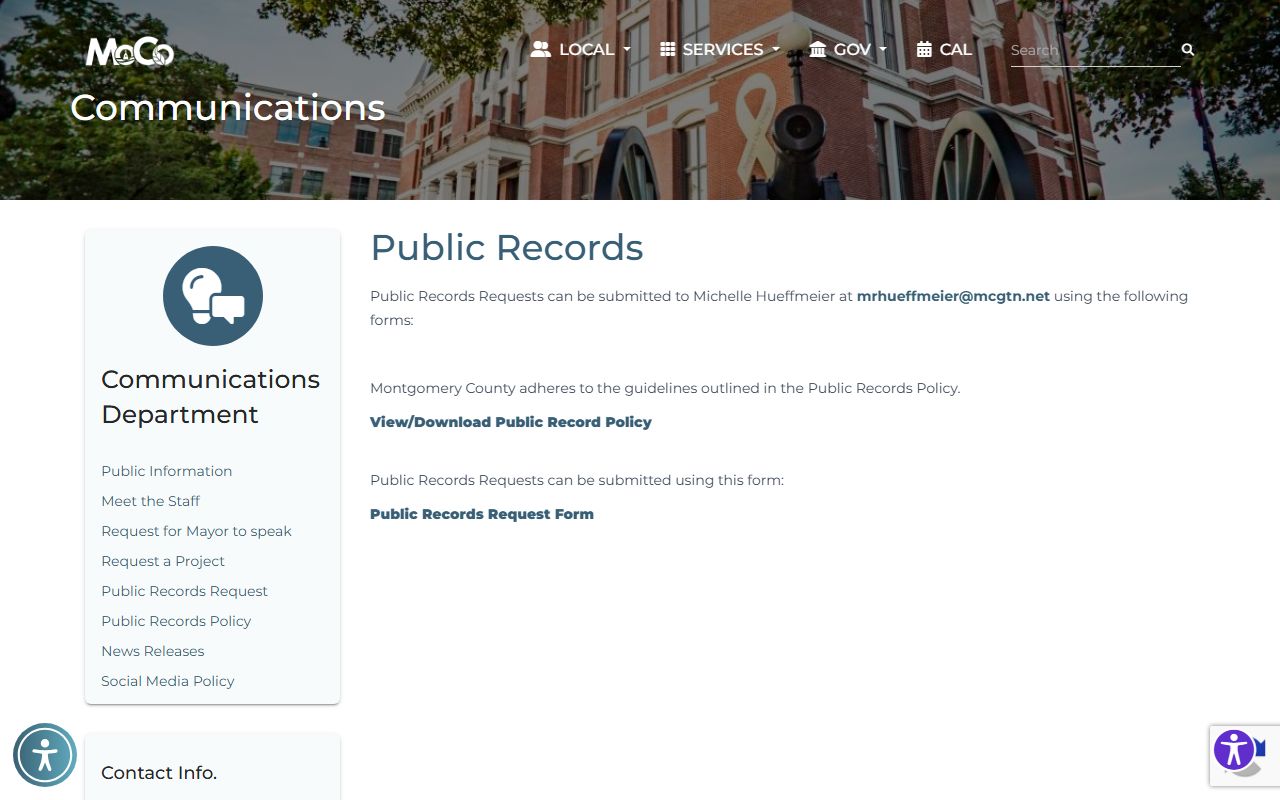
It is the official starting point for a Montgomery County public records request. Keep a copy of what you submit and the date you sent it. If you do not hear back in a reasonable time, follow up with the coordinator and reference your original request, since a written trail helps if a dispute comes up later.
Public Records Request Form Fields
The county request form gathers who you are and what you want. Clear detail speeds the response.
| Field | Type | Notes |
|---|---|---|
| Requester name | Text | Who is asking for the record. |
| Contact information | Text | Phone or email for the response. |
| Records requested | Text | Describe the record as clearly as you can. |
| Format | Choice | Inspect, copy, or electronic delivery. |
The Act lets a request be made through means the entity uses to do official business. You do not have to explain why you want a record, though you may need to show you are a Tennessee citizen. Choosing electronic delivery, when the office offers it, is often the fastest and cheapest way to receive copies.
Response Timelines
Tennessee law expects a prompt response. An agency must make records available within a reasonable time or tell the requester when they will be ready, and it can deny a request only on a legal basis. The county's records coordinator manages the timeline and any fee estimate.
If a record needs review for confidential content, that step can add time, since exempt material must be removed before release. A clear, specific request moves faster than a broad one. Naming the record, the office, and a date range helps the coordinator find it and keeps any labor charge down.
Public Records Fees in Montgomery County
The Act allows reasonable charges for copies and, in some cases, labor. The county sets the actual amounts in its policy, so confirm the current charge before the work begins.
| Item | Amount |
|---|---|
| Inspection of records | Generally no charge |
| Copies | Per county policy |
| Labor for large requests | Per county policy |
Ask for a fee estimate up front so a large request does not surprise you.
Records That Are Exempt
Not every record is open. Tennessee Code § 10-7-504 lists confidential categories, and other laws and court rules close more. Sealed court files, juvenile records, protected personal identifiers, certain law enforcement files, and records covered by a court order are not released to the general public.
When part of a record is exempt, the agency removes that part and releases the rest where it can. This is why a released record sometimes has blacked-out lines. The redaction protects a Social Security number, a medical detail, or a sealed matter while still giving you the open portion of the file.
If Your Request Is Denied
A denial must rest on a legal ground. If you believe a request was wrongly denied, the Tennessee Comptroller's Office of Open Records Counsel is the state resource for questions and disputes. You can also narrow or refile a request to focus on records that are clearly open.
For court files specifically, the path runs through the court and Rule 34 rather than the county records office. If the denial points to a specific statute, read that statute, since it usually tells you whether any part of the record can still be released. A focused refile that drops the exempt piece often succeeds where a broad request failed. The Office of Open Records Counsel can also explain your options when an office and a requester disagree about access.